memetic transfer
The ecosystem of information exchange, and the attention economy.
June 22, 2026 · 4561 words · 22 min read · essay, writing
back in 2012 when I moved from pattiveeranpatti, a small village to Chennai, a city in Tamil Nadu. there was something interesting, the kids there had no mental model of villages, farming or the culture around it. Coffee1, vegetables, and everything else were just things that you procure from shops. I remember explaining, in detail, the layers and process involved, but even then they could never grok it at the level that i’ve lived it in. the smell of sheep and cow that constantly lives in the air, the struggle of having to spend a day traveling and waiting at the ration shop to get your ration of rice and lentils, the fights that break out often for seemingly dumb reasons.2
but all of those were just obvious things of existence for my friends back home.
I’ve always been fascinated by the fact that I can take an overnight bus or a flight, and be transported from one bubble of existence to the other. it is as close to a time machine as you can get.
and now living in New York for the past two years, the jarring difference can’t be overstated.
In 2017, I was reading Richard Dawkins’ The Selfish Gene and came across the term meme. quite difficult for my young self to grok at first but after a bit of practice it made sense. a meme is anything that is able to capture cultural transport. a song, an idea, a tune, an image with captions, everything can be modeled as a meme. Revolutions have broken out because an idea resonated with the collective knowledge of the crowd. So the memetic transport is an incredibly important piece in our cultural system.
In the last two decades, the internet has amplified this transfer by a few orders of magnitude. This is how my uncle who can’t read and lives in a mud house knows about mr. beast. this is significant because this was only made possible by the memetic transfer across states, countries, languages and rivalries.
the pieces
I’ll first unpack the individual pieces of memetic interchange. and then go into detail about how it impacts us.
a meme3 is any idea that gets captured by an individual or medium.
a meme cannot exist in a vacuum. without a host to keep a meme alive and propagate, the meme becomes extinct.4 this is what happens in the case of languages, cultures and communities that don’t exist anymore. the last host dies and the meme dies with them. a meme is always one generation away from extinction, which is why it has to keep finding new hosts to survive. for example, an idea like “children must be educated”.
the tight network of hosts, called a bubble, determines what type of meme even reaches a host in the first place.5 more often than not the bubble gets defined by the individual’s identity, the religion, the country or state they were born into. what is obvious inside one bubble can be unintelligible in the next. the same meme is gospel here and noise there.
these bubbles overlap into a larger network of bubbles that carries a meme forward, across the world. the network can be sliced across different dimensions such as geography, religion, culture, gender etc. and based on the subject of the meme, it becomes more valid in a specific dimension. a meme can only ever jump to an adjacent bubble, through the thin region where two of them overlap. and that crossing tends to ride on weak ties rather than close ones. the people closest to you already share most of what you know, so genuinely new memes usually arrive through the loose connections at the edges.6
a host has only so much attention, and a bubble only so much bandwidth. so memes aren’t simply spreading, they are competing with each other for the same scarce real estate inside people’s heads.7 most memes die because something else got the slot. this is the pressure that everything else, the boundaries, the carriers, the mediums, bears down on.
every overlap is also a boundary, and the boundary acts as a filter. a meme that reaches the edge of its bubble has to be re-expressed in terms the next bubble already understands, and most of them don’t survive that translation. they get stripped of context, flattened, or simply make no sense on the other side. so the boundary doesn’t select for what is true or deep, it selects for what is translatable. and translation resists complexity.
not every host moves a meme equally. a few of them, the carriers, sit in the overlap between bubbles and transmit far more than their share: the bilingual, the immigrant, the person with one foot in two scenes. epidemiology calls them superspreaders, gladwell called them connectors and mavens.8 these are the hosts that actually do the cross-bubble work. a meme that lands on one of them can jump a boundary it would never have crossed otherwise.
the medium of propagation is really important. as the medium controls how a meme is expressed. for example it is impossible to explain relativity in under 15 minutes, but that is basically what thousands of popular videos do, you can watch all these videos and still not have the first clue what it is. The medium is indeed the message 9 but at a vastly rapid and bidirectional scale. There are some memes that cannot be expressed in a 15 minute or a 30 second video; the “surprisal” of the information is capped. The medium is also the reason why any reasonable conversation online degenerates into people calling each other nazis.10
the speed of transmission of a meme determines how it traverses across bubbles. It depends a lot on how novel the meme is 11.
and a meme never crosses cleanly. each host rebuilds it inside their own head rather than copying it byte for byte, so it mutates a little on every hop.12 this fidelity, how much of a meme survives the retelling, decides whether it stays recognizably itself across a thousand hosts, or drifts, bubble by bubble, into something its origin would no longer recognize.
the mechanisms
Okay, now that these things are defined. how does it impact individuals, as we operate in the world?
irrespective of your liking, you are already inside a bubble and your bubble is already engineered, sliced by country, language, demographic, interests. that part was always true. what’s new is that the boundaries are no longer accidents of geography or birth. somewhere there is an engineer tuning a ranking model that decides which memes ever reach your instagram feed, what to keep you thinking about, and somewhere else a PR executive is engineering a “social phenomenon” on behalf of a client. the village bubble i grew up in was shaped by mountains and bus routes. the bubble you scroll through tonight is a product decision, made by someone with a dashboard, optimizing for your attention because that is the scarce thing everyone is competing for.
some hosts have figured out the machinery and play it masterfully. the kardashians, elon musk, paris hilton13, mr beast, etc. are all operators in the attention economy and they’re really good at it.
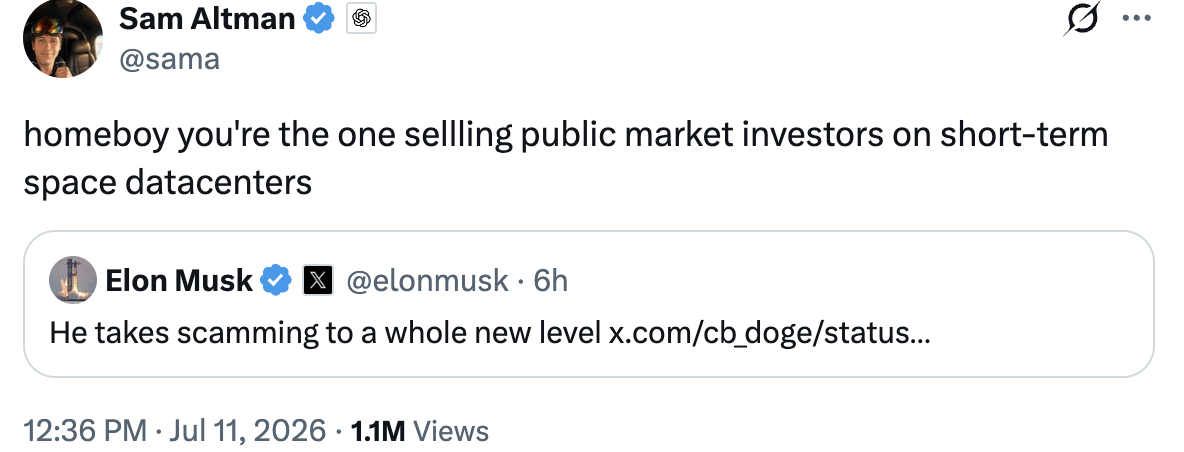
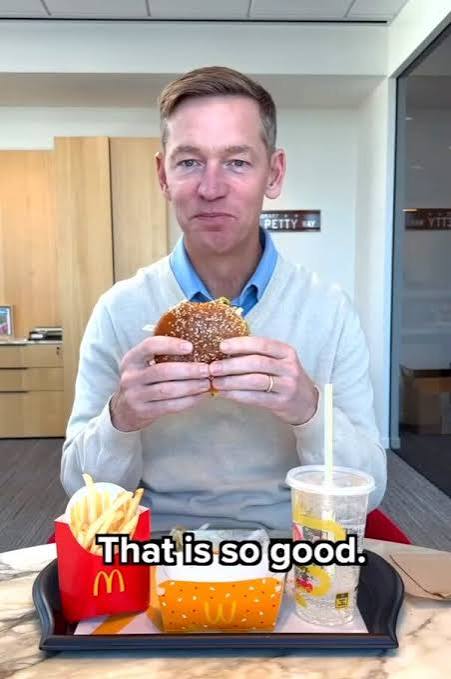
they understand that attention is the bottleneck and that controversy is the cheapest way to seize it. a boring meme dies quietly at the boundary of its bubble. an outrageous one gets carried across by the very people who hate it. so the operators keep doing bigger, brasher, more crass things, because outrage is the most translatable emotion there is. it needs no context, it survives every boundary crossing intact. richard branson, talking about musk, said it is important for a CEO to be entertaining. an entertaining CEO turns every customer and every hater into a carrier working for free. steve jobs is a good example of this. McDonald’s CEO eating a burger is a bad example of it.14
behind the visible operators are the invisible ones who know how to manipulate the fabric of the attention economy: the manufacturers. ryan holiday’s trust me i’m lying15 is the best confession of how this works. the trick he describes, “trading up the chain”, is pure memetic engineering: seed a fabricated story on a small blog nobody checks, a mid-size site picks it up because the small blog “reported” it, and by the end of the week it’s on national television. each hop launders the meme’s credibility while stripping its context, which is exactly what boundaries do anyway. the manufacturers just do it on purpose. this is also where “the current thing” comes from. it feels like the whole world spontaneously started caring about one topic, but more often than not it was decided in a conference room with access to a handful of top carriers, and the network did the rest. This is true of football, affordability and zohran Mamdani.
when being a host inside a bubble, whatever the bubble is currently consumed by feels like the most important problem in existence. everyone you know is talking about it, every feed you open leads with it, and the consensus is so total that doubting it feels like a moral failure. the ranking model surfaces the topic because it holds your attention, and it holds your attention because everyone around you seems to care, which is a self-enforcing loop. the sense of urgency you feel for the current topic (be it the latest scandal with kylie jenner or shahrukh khan or how some politician made a racist/casteist remark) was engineered upstream of you, by the same operators and manufacturers, because an individual who believes this is the most important thing happening is an individual who keeps scrolling, sharing, donating, raging.
take the metaphorical overnight bus. if you travel far enough your most important problem in the world is unintelligible noise to the new bubble, and theirs never trended at all. my friends back home spent those same years worried about rain and crop prices, and no feed anywhere was on fire about it. importance inside a bubble measures how much attention a meme captured, not how much the problem matters. so when something out of your control feels overwhelmingly important, you should take a break to ask who benefits from you feeling that way, who benefits the most by ragebaiting you into a topic that you weren’t interested in the first place? hans rosling has a rule for exactly this in factfulness: when someone pressures you to decide right now, say no.16 it is almost never now-or-never, and a decision made under urgency is far more likely to be a bad one, which is precisely why the pressure gets applied. the news cycle runs on the same instinct, everything is breaking, everything is a crisis, act before you think. urgency is not a property of the problem, it is a property of the sales pitch by the attention economy. One of my favorite pastimes back home is to find a newsstand with a newspaper headline that doesn’t trigger you or have an exclamation mark “!” in it. I’ve never managed to find one, ever.
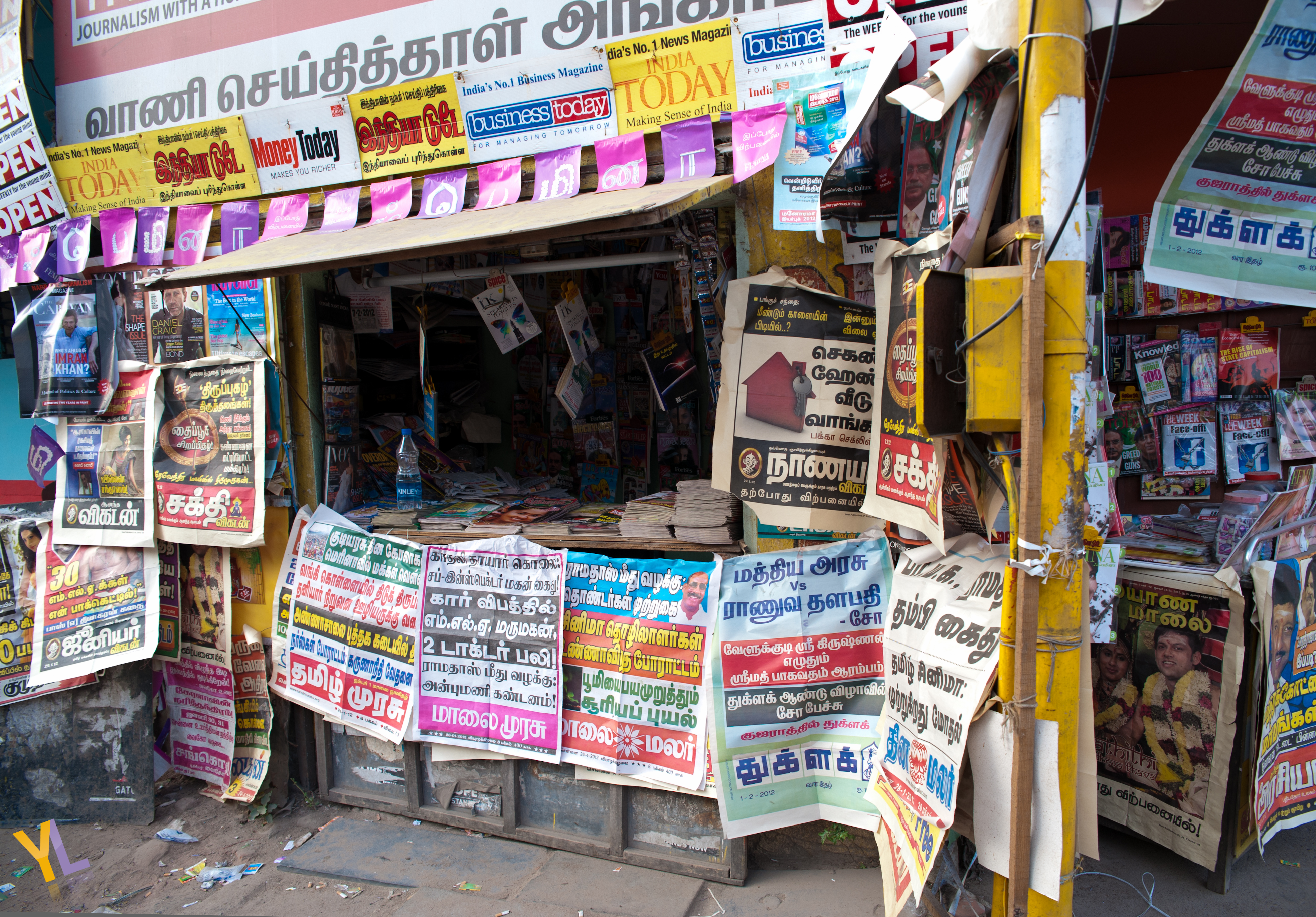
and here is the corollary, you will not find the most important problems in the world in the newspaper or the newsfeed. what you find there is the current thing, and the current thing is a lagging indicator. by the time a meme has crossed enough boundaries to reach your feed it has been translated, flattened and claimed, the operators have taken their positions, the manufacturers have already run their campaigns. you are not being informed early, you are likely the last hop of the chain. and the current thing wasn’t selected because it matters, it was selected because it enrages. an enraged host shares, a calm host doesn’t, so the attention auction is systematically won by whatever makes you angry, not whatever makes you better. the genuinely important problems are disqualified by the machinery itself, because they are slow, chronic and unphotogenic. a dam quietly depleting, a generation’s learning outcomes eroding because of Linguistic Purism, a demographic curve bending, none of these can beat a celebrity scandal in a fight for an attention slot, because nothing happened today. max roser makes this concrete: the headline “137,000 people escaped extreme poverty yesterday” could have run accurately every single day for 25 years, and it never ran once.17 news is what happened today, and the important stuff is what happens every day. nassim taleb calls the news cycle not just useless but toxic, the more frequently you sample the world the more noise you swallow relative to signal, and his cure is to read last week’s newspaper, and notice how little of it turned out to matter.18 he’s in old company there, thoreau said “read not the times, read the eternities” a century and a half before the feed existed.19 a good heuristic to consider is, if a problem is genuinely important, it will still be important next month, and you will not have learned about it from the feed.
you can’t fully trust your bubble, and not because the people in it are stupid or dishonest. it’s structural. every meme that reaches you has already survived several boundary crossings, losing fidelity at each hop, and the bubble itself was selected, partly for you and partly by someone else. so how do you figure out what is true? the only real defense i know of is counterfactuals from outside: deliberately keep weak ties into bubbles that have no reason to agree with yours, the other political side, the other country, the other profession, and check whether the meme survives translation there. a true meme should keep its shape in a bubble that doesn’t share your incentives. if an idea only makes sense inside your own bubble, that’s a fact about the bubble, not about the world.
During an india vs pakistan war some 8 years ago, I was actively trying to find newspapers from pakistan and read them. at the same time that the indian press was reporting that india attacked a lot of important pakistan flag posts. Pakistan press was reporting that the pakistan army was raining hell on india and has captured their generals. This was clearly a case of a nation pushing its agenda towards its citizens. not about absolute truth. the politicians in India and Pakistan respectively were the operators in these cases who were controlling the narrative because it benefits them to have the support of their population. and feeling like winning is important and even more important is to be angry at the other side.
whether you like it or not, whatever you build, create, write or ship enters this system as a meme and gets subjected to all of the above. you are already playing, there is no neutral position, opting out just means other people control how your meme translates and the operators get to decide whether you raged about something or not. this is why understanding the machinery matters even if you find it distasteful. the system doesn’t care that you didn’t want to participate.
which raises the practical question: how do you go from being just a node in someone else’s bubble to being able to influence one, at any size? the era of silent operating excellence, do great work and let it speak for itself, is over. the work never speaks for itself, it gets spoken for, by whoever narrates it first. “all the world’s a stage”20, and owning your narrative means being able to move a bubble. the size matters less than you’d think. a small bubble you can genuinely move is worth more than a huge one where you’re just a consumer, because influence compounds at the boundaries. the reliable path is to become a carrier yourself, sit in the overlap between two bubbles, and translate. take what is obvious in one and re-express it for the other. that position is rare, and the network rewards it far out of proportion to the effort. Evolve yourself from host to player.
memes aren’t the only things that migrate across the network. hosts migrate too, and they obey the same physics. i’ve felt out of place in most bubbles other than back home, and it took me a long time to understand that this is structural, not personal.
every bubble has a density, a measure of how much reach and impact its hosts have on the bubbles outside it. there is a small bubble of high performing individuals who pretty much decide what the next generation grows up thinking about politics, education, relationships, etc. directionally, you want to be moving into denser and denser bubbles, the ones whose memes shape the world instead of just reacting to it. essentially increasing your leverage to the world.
but you cannot coexist in a bubble too far from your own. you can find a bubble you aspire to, an awesome group of authors, an incredible set of smart people, but you cannot jump into it. there is too much memetic knowledge you lack to even parse what is happening inside, let alone exist there. i call this bubble shock. moving from a village to a city took me four years of feeling lost to understand it. moving from college to a job took another two. the same rule that governs memes governs hosts: a meme from four layers away is indistinguishable from noise, and so are you, to a bubble four layers away. a host, like a meme, can only ever migrate to an adjacent bubble, before it becomes impossible to ramp up.
which makes the whole thing a pathfinding problem.21 you know where you are, you have a directional idea of which bubble you want to be in ten years from now, and the work is finding a viable route through the network, moving from wherever you are to the adjacent bubble, then the next. finding that optimal next bubble is the genuinely hard part, and a host can only move so far from their current bubble before it becomes impossible to ramp up in time.
inside each new bubble the ramp is: study, imitate, interact, in that order. the order is important. you can keep interacting with the hosts of a bubble for years and never become one of them, because you never spent the time studying and imitating them first. imitation is the tough part, because it feels like departing from who you are as an individual. the neighboring bubble will do things that look counterintuitive to you (why wear ties? why care about watches? why be interested in cars?) or outright nonsensical (why travel and waste money? why should I care about taylor swift’s marriage?). but imitation is what gets you the invite. i believe individuals are very dynamic and capable of evolution, so it never bothered me that i was losing my “self”. everything becomes a trade-off evaluated against the destination, the idea is to invest time and money in things that advance you toward the next bubble.
and there is no point in feeling guilty about moving away from your roots, because what we are and where we come from can never be erased, it is part of us. the work and effort we put in is itself a form of respect toward those roots, the path we take honors them. i struggled with this a lot, even in college, should i be true to where i come from, or become what i can be? this reasoning is what keeps me sane.
the hosts who complete this migration more than once are rare. these migratory host is what a carrier looks like from the inside: every bubble they’ve lived in stays alive in them, so they sit permanently in the overlaps, and that makes them culture carriers with leverage far out of proportion to their numbers. they are the bridge a meme rides when it crosses a boundary, and both sides of the boundary need them more than either side admits. operating as one is mostly endurance: expect the shock and budget years for the ramp, not weeks. keep weak ties alive into every bubble you’ve left, because your leverage is the set of bubbles you can still translate between. and trust that the skill compounds, each migration is easier than the last because the thing being trained is migration itself. most people expect to die in the bubble they were born into. a migratory host can land in a new bubble and thrive, because adaptation is the one skill that transfers everywhere.
but maybe, if you find a bubble you’re comfortable in, it’s okay to stop running and just be in it? i think that’s a philosophical question that depends on the person. the only real mistake is believing the bubble you happened to be born into is the only one you’re allowed to exist in.
here’s a strange consolation. the same speed that makes the system feel terrifying also makes it very forgiving. since memes travel so fast, they also die fast, the attention slot gets reallocated in days. last month’s scandal cannot compete with this morning’s. so does it matter if you go out into the world, try something, and get it publicly wrong? much less than you fear. the crowd’s memory is short because its attention is scarce. You only lose if people forget about you. the flip side is that good work decays on the same schedule, which is why the operators never stop producing. but for the rest of us the asymmetry is freeing: the cost of a public mistake is temporary, and the cost of staying silent inside your bubble is permanent.
If you’ve made it this far. congratulations!! you’re already a master at breaking through the memetic bubble, you were able to sit through 15 minutes of drudgerous wall of text. in a very optimistically nihilistic way, what you do won’t matter anyway. but at least if you’re vocal about it you have a chance of making a dent for a brief amount of time.
My grandfather was a coffee farmer / merchant ↩︎
I wrote a bit about this villages villages-2 ↩︎
originally coined by Richard Dawkins a meme is an idea that spreads by means of imitation. ↩︎
Susan Blackmore pushes this analogy the furthest in The Meme Machine (1999), memes are replicators that need hosts the way genes need bodies to carry them around. ↩︎
C. Thi Nguyen draws a useful line between an epistemic bubble, which simply leaves outside voices out, and an echo chamber , which actively discredits them. the bubble is the easier one to escape, you just have to be exposed to the next bubble over. ↩︎
Mark Granovetter’s “strength of weak ties” , the people closest to you move in the same circles, so what they know overlaps heavily with what you already know. novel memes arrive through weaker, more distant connections. Ronald Burt’s structural holes extends this: the hosts who bridge the gap between two otherwise-disconnected bubbles are the ones who move memes the furthest. ↩︎
Herbert Simon’s line, “a wealth of information creates a poverty of attention.” the modern attention economy is built on exactly this scarcity. ↩︎
Malcolm Gladwell’s The Tipping Point calls them connectors, mavens and salesmen, epidemiology calls them superspreaders . worth noting the “a special few people drive everything” claim is contested — Duncan Watts argues a cascade depends more on how ready the network is than on who happens to start it. ↩︎
when Marshall McLuhan published “the medium is the message” it was only directed at the television. It would’ve been hard to imagine the scale at which the internet operates or the tiktoks and audio content formats that we have today. ↩︎
godwin’s law applies online, because of multiple factors including leaky abstraction of language, conversing online easily degenerates into people calling each other nazis. because the medium forces people to converse in this manner you cannot express incredibly vivid ideas on these platforms. ↩︎
Claude Shannon measured information as surprisal . the less likely a message, the more bits it carries. so novelty and information are almost the same thing. but there’s a catch: maximum surprise is just random noise, and noise doesn’t spread. a meme that’s too novel for its bubble can’t be decoded there and dies at the edge. the ones that travel are surprising enough to be worth passing on, familiar enough to be grokked. a meme from 4 layers above or below is equivalent to random noise. a meme can only get transferred to its next neighbours, before it has to be transformed into something more comprehensible. ↩︎
closer to Dan Sperber’s “cultural attraction” view of memetics, ideas aren’t copied faithfully like genes, they get reconstructed by each receiver and pulled toward shared mental “attractors”. so a meme drifts a little with every retelling. ↩︎
Ryan Holiday, Trust Me, I’m Lying (2012). written by a former media manipulator who ran exactly these campaigns, and describes “trading up the chain” from the inside. ↩︎
Hans Rosling calls this the urgency instinct in Factfulness (2018), the last of his ten dramatic instincts. his advice: if it feels now-or-never, it almost never is. take a breath, insist on the data, and be suspicious of anyone who won’t give you time to think, because urgency is how salesmen and activists shut down your critical faculties. ↩︎
Max Roser, Our World in Data . his point is that the most consequential changes are slow trends, and a daily medium is structurally blind to them, the best news of the last half century was never “news” on any particular day. ↩︎
Nassim Taleb, in Antifragile (2012): “To be completely cured of newspapers, spend a year reading the previous week’s newspapers.” the underlying argument is from Fooled by Randomness , the more frequently you sample data the more of what you see is noise, so daily news consumption is close to pure noise ingestion. whatever survives a year is signal. ↩︎
Thoreau, in Life Without Principle (1863). the modern versions: Rolf Dobelli’s Avoid News , “news is to the mind what sugar is to the body”, and Aaron Swartz’s I Hate the News , which points out that the important stories are the ones that stay roughly the same every day, which is exactly why they never get covered. ↩︎
Shakespeare, As You Like It . he meant that everyone plays roles through the stages of life; the internet made the stage literal, with a global audience and a recording. ↩︎
in computer science, pathfinding is the problem of finding the optimal route between two points in a graph when you know the start and the goal but not the path. algorithms like Dijkstra’s and A* solve it when the whole graph is visible. life is harder: the network of bubbles only reveals itself one hop at a time, so you’re navigating with a heuristic, a direction, and a lot of backtracking. ↩︎
No day is a long one for the man who is up and about! ― Seneca the Younger